Wellcultured - Well Cultured is a men’s online magazine with advice and reviews on fashion, dating, finances, health, music, movies and many other topics, as well as a robust message board and the Well Cultured Guide, a freely editable community wiki.

Energy Drinks, Energy, and Health

September 2nd, 2010

I drink a ton of energy drinks (amp, red bull, 5hr energy). They help me stay focused in class. Should I stop drinking them to be healthy? How do I get more energy?

Short, too hyper to pay attention and read the entire response answer: Yes. Get caffeine other places, sleep lots, and eat well/exercise.

Energy drinks are generally not good for your health. From a general nutrient perspective, energy drinks contain a huge amount of sugar and calories. Just like you would gain weight eating a bunch of doughnuts every day for “energy”, energy drinks will add fat to your body. This can also happen incidentally because energy drinks are like soda, and thus do not properly hydrate your body like normal water would. From a general health perspective, energy drinks can also unsafely ramp your energy up and force it to plummet down quickly, creating a “yo-yo effect” that ultimately hurts you more than it helps you.

Energy “yo-yo”ing is something that really can mess up your efficiency overall. While you might feel energetic while you drink energy drinks, the inevitable crash (which happens one to a few hours later, depending on your metabolism) will pull you down hard, making you ultimately less efficient over time than you would be if you had never drank the energy drink in the first place. If you don’t manage this “yo-yo effect” properly, it can also really screw up your sleep cycle and make you even more tired, making you drink more energy drinks and perpetuating the vicious cycle. Trust me: I learned a lot about this as a freshman in undergrad, and it’s rough.

So what can you do instead?

First off, if you really want a boost of caffeine, drink coffee, tea, or take caffeine pills. Good old fashioned coffee, pending you don’t load it up with sugar and calories, is a great way to stay alert, hydrated, and healthy. Green tea is even better in some respects. If you want your caffeine in a more potent and convenient form, caffeine pills are also a great option. While I don’t entirely like endorsing it (both due to the price and due to the fact it’s still an energy drink), 5 Hour Energy is also a choice you could consider.

Second off, get more sleep. For some reason, lots of students (even graduate and professional students, despite the fact that they should know better by now) don’t get enough sleep, and this forces them to obsess about getting more caffeine. If you genuinely want more energy overall, sleep well — don’t sleep fewer than 6-7 hours, and don’t sleep more than about 9. Good sleep will help you learn better (seriously, your memory will improve), it will help you develop muscle and burn fat better, and it will help you have more energy throughout the waking hours of your day.

Third off, eat and exercise better. Proper diet and exercise will give you all the energy you need. Don’t eat excessively greasy and/or carb-loaded foods — they will make you groggy and slow, two things that undoubtedly make you feel like you need more energy. Light, healthy, protein-packed meals do a much better job. Exercise will also give you more energy. Though it seems as if you might lose energy hitting the gym periodically, overall, exercise gives you more energy and stamina, thus allowing you do to better in class.

So the basic message here is to not buy into the $5/bottle energy drink phenomena. It perpetuates a vicious cycle of unhealthy “yo-yo”ing that you can entirely avoid with healthy life choices.

DB Bench Presses

August 29th, 2010

Are dumbbell bench presses worth it? Or should I just stick to normal bench presses with an olympic bar?

Do both.

Dumbbell bench pressing is great because it makes both of your pectorals work, rather than allowing one to compensate for the other. The great thing about dumbbells is freedom — you can do a fly motion or a bench press motion with dumbbells, allowing you to change up your chest routine and make yourself work harder.

The only real caveat to dumbbell bench pressing, other than the fact that it’s a pain in the ass to get the dumbbells, is that you usually cannot do as much weight as you normally would be able to on an olympic bar. I personally like to think of dumbbell bench presses as the equivalent of a “fine tuning” lift — you do the olympic bench pressing to crank up the weight and to work your chest and stabilizers, and you use dumbbell bench pressing/flys to further work out the chest and stabilizers in different ways to really get a serious workout.

So the answer is simple: do both.

Weightless Exercises

June 26th, 2010

There are often times I’m left at home without a way of leaving (No keys to re-enter the house), yet I want to exercise and work out. What are some simple, yet effective workouts you can do at home without any equipment?

I’ll list a few different exercises — some require no equipment at all, whereas some are ridiculously cheap.

Weightless Compound Lifts
Yes, you can do compound lift movements without an olympic bar — you aren’t gonna build up big muscle mass by doing them, but they do burn a number of calories. Squats are easy — just squat down like you would with an olympic bar, and obviously squat all the way to the ground. If you have them available, a backpack filled with books or even a heavy object you hold over your head will add weight to the movement. Bench presses can be replaced by push-ups — switch hand positions (closer, farther apart, etc) to place different amounts of weight on your triceps/pectorals. Deadlifts can also be done weightless — find a heavy object and lift it up like a deadlift, keeping as much knee movement in the motion as possible.

To really make these count, focus on variation. Instead of doing the standard weight lifting 5×5 routine, focus on doing a lot of reps and a lot of sets with different types of reps. Try a set full of deliberately slow reps (like squatting very slowly), half reps (coming down halfway, stopping, counting to one second, and standing up again), pulse reps (stopping midway and lightly bouncing) and half-slow reps (going down slowly, popping up). These are a lot more effective than they sound — going slow and pulsing in particular is fairly intensive, as it can trap lactic acids in the muscle (a good thing). Squat-jumps and, if you can, clapping in between push-ups are also great ways to add intensity. Don’t rest as much between sets — keep your heart rate pumping. Again, none of this is going to make you body builder huge, but these movements all activate a significant number of muscles, which will burn calories fairly efficiently, especially at a faster cardio-like pace.

More specific exercises

There are plenty of other exercises you can do without weights. Tricep dips are fairly easy — find a couch or bed, put your hands on the edge of the couch with your chest facing up, keep your legs out, and dip your body down, push up, and repeat. To hit your legs, calf raises and lunges work incredibly well, even without weights. While presses are somewhat hard to do without weights, if you find two very heavy objects in your house, you can easily press them for a nice shoulder workout.

Burpees

Burpees are god’s gift to weightless exercise. I won’t go into the finer details, as you can find a ton of information on them online, but burpees area killer exercise, and should really be put into any sort of weightless exercise routine. Do them.

Easy Equipment Exercises

If you do have a little bit of spare cash on hand, you can get some pretty good tools to do exercises inside of your house that shouldn’t break the bank or take up too much space. One of the best purchases you can make is a good pair of dumbbells — even 10lbs will do, as at a cardio speed, they will feel 100lbs. For a heavier cardio focus, look into a jumprope. If you want a good ab workout outside of crunches, reverse crunches, and similar weightless motions, look into an ab wheel — they work incredibly well. If you really want to look into something effective, a pull-up bar (or simply a bar you can do pull-ups on) works wonders.

Steroids

June 9th, 2010

I’m really scrawny, and no matter how much SL 5x5or other lifting I do, I can’t gain right. I’m interested in starting some ‘roids. What do you think?

Well, first off, drugs of that caliber are illegal, so I have to advise you don’t do so simply on the basis of legality. Yes, it makes very little sense that they are illegal, and most of the ideas regarding them are misconceptions, but the fact remains nonetheless.

Outside of that, however, there are multiple reasons why not to do steroids. While it seems tempting to do them because they help body builders bulk up, steroids have a lot of nasty side effects that make them pretty horrible for anyone who wants to look good. First off, taking steroids inhibits natural hormone development — it’s a temporary effect, but nonetheless a pretty strong one. Steroids can also strongly encourage gynecomastia (aka “bitch tits”) — meaning you develop breasts. Steroids will typically give you lots and lots of acne, and encourage the chances that you begin balding early (if you are going to). Other side effects include liver damage, changes in your cholesterol, and the like. There are a lot of horrible, horrible side effects — read about them yourself.

If you want a quick way to bulk up and put on muscle, do GOMAD — that is, drinking a gallon of milk a day. While this is not advisable on the long term, GOMAD is a great way to rapidly put on weight and muscle — for all intents and purposes, it’s shocking your body into developing muscle quickly. GOMAD is never advisable for people at normal/heavier weights, but if you do it (with a very heavy, extensive weight training regimen, including lots of compound lifts) as a skinny guy, you will gain muscle like crazy, and you will usually keep it. GOMAD is basically a hellishly intensive bulk, a very effective one.

So basically, don’t focus on steroids, they are almost always a very poor answer to a problem you can fix in a much more efficient and legal way. Stick to GOMAD and intense training, while remaining patient, and you will get results.

Choosing a Gym

May 30th, 2010

How do I pick a gym? Should I join a local joint or a big company one? Any advice?

The first thing you need to always keep in mind when picking a gym is what you’re actually going to use it for – not surprisingly, many presume they will use more of a gym’s facilities than they actually do. Before you even go “shopping” for a gym, make a mental list of what you actually will use it for — cardio, light weight training, heavy weight training, group classes, etc — and stick to your guns.

Most gyms nowadays make money not necessarily based upon day-to-day membership but rather based on selling memberships on a long term basis, meaning that they try to push you to sign for long term contracts on ridiculously expensive plans that promise everything from weight room access to personal massages. The idea, of course, is to get you to sign up for things you cannot possibly use and you will eventually never use (by means of forgetting or simply being lazy) — meaning they make raw profit. The best thing you can do, then, is to determine what you want to use and to only pay for that in the most affordable way possible — and to find a gym that caters to your specific needs.

If you want to do heavy weight training, find a good gym equipped for heavy weight training. At minimum, a good lifting area will have one or more squat racks, one or more bench presses, a few Olympic bars and sets of Olympic plates, a set of dumbbells, a pull-up bar, and maybe some extra accouterments like a leg press machine, a sit-up machine, and the like. You can often identify places that cater to the muscle building crowd, asĀ  they will have equipment like straps, chalk, lifting belts, and other tools laying around for your use — and they’ll usually have a few meatheads either working there or working out there. These places are phenomenal for beginners, as the aforementioned meatheads are usually awesome guys who will help you (and keep you safe) much better than underpaid mega-fitness center staffers ever could.

If you plan to do cardio or light weight training, you’ll probably want to find a place with a bit more variety and friendliness, so look for somewhere with a variety of cardio machines (treadmills, bikes, elliptical machines), some weight lifting equipment (maybe nothing heavy duty, but machines are nice, etc), and the like. If you want group classes, find a place that offers them on a regular basis with a real personal trainer, and look up reviews if you have to. In the context of cardio machines, make sure they are kept clean and neat and in working order as much as possible, and that they are relatively expensive machines — they don’t have to be amazingly new, just sturdy and ready for your use.

Don’t be waylaid by gyms that offer things like the “latest” equipment, ridiculously fancy televisions, in-house protein supplements/nutrition bars, and the like. Usually, these are all scams. The “latest” equipment can be nice (and relatively clean), but it never justifies paying more — exercise has not fundamentally changed so much as to make the latest equipment that much better when it comes to getting fit. Weight lifting machines are good for absolute beginners, but nothing beats free weights. Some gyms offer great televisions and iPod services and the like, but don’t pay extra for them — bring a MP3 player of your own or something to keep you distracted. In-house protein mixes, nutrition bars, and juice bars are almost always overpriced under-performing scams — and, if they offer any form of diet supplements, they can be dangerous (to the extent of being life-threatening). Unless you really need or want one, never pay for a personal trainer — few know what they are doing enough to give you results you can’t get on your own.

Additionally, avoid gyms and fitness centers that are obviously set up for the Jenny Craig crowd — they’re usually for women and not equipped for anything hard at all. Avoid Planet Fitness like the plague, their “lunk alarm” — a literal alarm that goes off if you grunt and/or drop a weight — is an insulting idiotic policy that is prohibitive to all but the most pansy weight lifters. I hate to say it, but basically try to avoid any place that calls itself something like a “judgment-free gym” — while the idea is nice, most of these places are set up to be non-offensive and easy, meaning they sometimes are entirely insufficient for actual exercise. Places like your local YMCA are usually a good start, but always be careful, as YMCA centers can be a mixed bag.

In all reality, if you are male, the best thing you can do (in my mind) is to find a super-cheap small gym that has oldschool weight lifting equipment and maybe one or two cardio machines. Nothing really beats freeweights for building muscle, and nothing really beats an old-fashioned treadmill or bike for cardio. It doesn’t have to be pretty, have fancy equipment, or even have personal trainers on hand — all you need is a place that you can push yourself.

http://www.jcrew.com/AST/Browse/WomenBrowse/Women_Feature_Assortment/NewArrivals/shoes/PRDOVR~26404/26404.jsp?srcCode=AFFI00001&siteId=J84DHJLQkR4-kJDnmEtvXO7L8XcPd2FF3w

Oatmeal for Health

February 12th, 2010

A lot of my friends tell me to eat lots of oatmeal, and that its healthy and helps you weight lift. Is oatmeal good for health? How should I cook it?

Is oatmeal good for a fitness training plan? Absolutely positively yes. But it isn’t some sort of magic potion, and its effects are over-exaggerated in the fitness world nowadays.

Oatmeal is not some sort of magical get-bigger-quicker sort of substance- it’s just oatmeal. The reason most people who do weight lifting and other fitness programs like it is because it’s a phenomenal filler food that’s remarkably healthy. Oatmeal contains only scant amounts of protein and iron, so it’s not entirely a “health food” per se, but it’s the type of thing you can eat and get full on without breaking the bank nutritionally. On top of that, many (including myself) find it makes a great pre-workout snack- it’s stable and thick enough to not interfere with exercising, yet it will still giveyou a nice energy boost. Ultimately, if you weight lift a lot and get hungry a lot, there’s nothing quite as good as oatmeal to fill you up quickly, pending you aren’t specifically looking for the protein.

As for how to cook/eat it, fix it however you like. Don’t listen to the obsessive types who demand you eat raw steel-cut oats without anything in them- that’s both unrealistic and not very tasty. So long as you don’t load it full of sugar or syrup or something, oatmeal is pretty much universally good and filling, and there is no problem with putting a little bit of white or brown sugar in it for flavor. I personally like to put in Splenda artificial sweetener. Though fake sweetener still spikes your insulin and has some of the same effects as sugar, it’s certainly better than the real thing.

In any case, if you’re hungry, feel free to eat oatmeal. You could do MUCH worse.

The 6 Rules of a 6-Pack

January 17th, 2010

Seemingly regardless of where you go, most magazine stands carry some variant of the standard articles about getting a 6-pack- from “Easy Six Packs!” to “Exercises to Carve your Midsection”, there are many journalists who erroneously promote schemes to get a quick six-pack- oftentimes lying to you in the process.

I’m quite tired of that. There are so many misconceptions about abdominal muscles nowadays (particularly in the realm of how to get them) that it seems no-one has it right. So, to fix that, I’m going to list out 6 simple rules about getting a six-pack- some you’ve probably never heard of before or that go against things you’ve heard before, but valuable lessons about yourself, your diet, and your training.

Rule 1: Body Fat is Everything.

The key to having a six-pack is body fat- and very little else. Despite a LOT of literature promising an easy six-pack via arcane exercises or odd machines, the main factor in having a carved stomach is actually losing body fat percentage, not necessarily having strong core muscles (though that helps, see below). This actually explains why a lot of rail-thin guys tend to have faint outlines of a six-pack, despite little to no exercise or effort: men typically store body fat quickly in the stomach, and having little of it exposes muscles that are usually rarely (if ever) shown.

Rule 1 is Rule 1 because it is the most important to getting a nice carved stomach: if you want one, lose weight, but maintain muscle. Hit the gym lots. Move lots. Weight lift. Eat better and eat well. Optimize your body to lose body fat while maintaining muscle mass and the like. Remember: it’s not about body weight, it’s about body fat- the former you need not care about as much as the latter (you can easily be 110lbs and be fat, or be 200lbs and be carved).

Rule 2: Ab Exercises are best done rarely.

Ab Exercises, like curls or certain tricep exercises, are often wastes of time with results better achieved through compound movements. This does not mean that they are entirely useless: however, ab exercises are best placed at a very low priority on any good weight lifting regimen, regardless of how badly you want a six-pack. Excessive crunches with 20% body fat will do nothing for you aesthetically whatsoever.

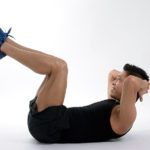
The real advantage of ab exercises (and core exercises in general), especially very isolated exercises like crunches, are to help build up rudimentary strength that can be used to assist stabilizing things like squats. To really work your abs and your core, find exercises that utilize them in a compound way- things like squats (especially front squats) and deadlifts are actually phenomenal ways to do this. They also, at least from my experience, seem to be 300x more efficient and utterly manlier than spending 30 minutes upside-down on a sit-up bench trying desperately to have a nice stomach.

Rule 3: Machines don’t do a thing.

If it is on TV and it promises something about abs, it is lying. If it is some sort of complex wannabe situp machine, it is useless. The only exception that I have personally found are expensive weighted oblique machines that go over ~100lbs, which are hard to find and can easily be replaced with other exercises. There is nothing more to say on this topic.

Rule 4: More Muscle, More Difficulty, Better Abs.

Let me go ahead and say something somewhat offensive: incredibly skinny people have an easy time getting fairly unimpressive abs. Impressive abs come from people who weight train hard and put on real muscle, not those who simply slim down enough to get tiny cuts to make them feel strong.

Many weight lifters feel really depressed when, even after years of exercising, they don’t get the six-pack they want- be it becauseĀ  they eat a lot to continue building muscle or simply the lack of focus to lose the weight. However, this is okay- at higher weights, it can often become incredibly difficult to, without a focused diet and exercises, carve away fat and get a nice stomach. Still, it’s utterly more impressive: once you get those nice abs at over ~180lbs, the skinny kids who don’t touch the gym at 130lbs who manage to have a six-pack don’t compare.

Rule 5: Abs do not mean Strength.

Right along the lines of #4, having abs does not mean you have any sort of strength, as it is more of an aesthetic thing related to body fat than anything else. It is very easy to be slightly carved at lower body weights, especially if you manage to get rid of the body fat you carry on your body normally. This does not indicate any sort of power. Many incredibly strong power lifters have nothing even remotely close to a six-pack.

Rule 6: Never exercise for a 6-Pack.

If your goal in exercising is to merely get a six-pack, you’re really on the wrong track.

There is nothing wrong with wanting to look good and exercising to get there- however, the “get a six-pack” culture many magazines have created has utterly destroyed good exercise plans through half-baked plans with attractive fashion models attached to them. Focusing exclusively on a six-pack is ridiculous- and often, those who do it end up looking unbalanced and ridiculous.

In reality, no matter how tempting it may seem to focus on your six pack exclusively, such goals never really do much- rather, focusing on general fitness and whole-body workouts will not only give you the aesthetic perks you desire, but also realistic strength.

Tiredness when weight lifting

January 9th, 2010

When I’m weight lifting and doing other exercises, I get really tired. I yawn a lot, and I also get sleepy quickly, and it makes me wanna quit. Advice?

Your nutrition is hurting you, and you may also have issues with sleep and energy in general.

First off, focus on nutrition. If you are eating too many carb-heavy meals (that is, lots of bread and the like), you may be causing yourself to feel “heavy” and tired. To fix this, try to focus on eating light meals with plenty of protein, vitamins, and minerals. Focus less on pastas and breads and more on vegetables, lean meats, and fruits. You may also want to try to eat more meals comprised of less food- big meals only three times a day will slow you down and also give you the desire to “fill up”, which will mean you eat too much in one sitting.

As for sleep and energy, try to work towards something a bit healthier. Cut back on the caffeine and sleep more to adjust for the lack. Run on the treadmill or use a similar cardio machine 15-30 times a day- try to make your body work. Don’t sit around on the computer all day- make your body know it needs to develop more energy.

If you follow these concepts, you’ll probably find a boost in energy. If you have serious energy issues, however, see a doctor- in some very specialized cases, something may be wrong.

Breaking the Weight Lifting Plateau

December 23rd, 2009

I weight lift and exercise a lot. Still, my gains and my weight loss have stopped, and it doesn’t seem worth it. It really sucks. How do I fix it?

What you’re describing is essentially what many call an exercise plateau, which happens for a variety of reasons- too little calorie intake (which results in a lowered metabolic rate), too much weight training on the same muscles (resulting in exhausted muscles that don’t have time to grow) and general routine problems.

First off, most people experience exercise plateaus after they begin what amount to “crash diets” because they screw up their metabolic rate- that is, they eat too little, their metabolic rate lowers in response, and they end up maintaining their fat despite exercise and diet. The best way to fix this, of course, is to maintain a healthy diet that isn’t unreasonable. If you’re trying to maintain a ridiculously low calorie diet while still exercising, then stop- it hurts rather than helps. Eat plenty and eat healthily.

On the weight training side of this affair, two things could be happening- you can both be over training muscles and also getting into a bad routine. Doing too much weight lifting too often can easily destroy muscles where you seek to build them- without giving your muscles a time to grow, rest, and recover, they do not properly grow and often can be strained by efforts in the gym. Of course, everyone seems to have different recovery times, but in general, doing weight lifting every day is a bad idea- try to do it every other day (a schedule like MWF is wonderful), and avoid exercising the same muscles twice in any three day period. Similarly, in this process, you could easily have fallen into a dangerous routine- that is, you’ve gotten “comfortable” to the point of sticking with a certain exercise at a certain weight at a certain number of reps. This is a process that results in no body improvement- it’s a routine for maintenance, not growth. Ensure that you always push yourself forward in a reasonable way- increase the weight, change the exercises, or change the number of reps you perform.

Still, the key job here is to merely push through your plateau- you aren’t going to improve if you give up or shrink away from it. If anything, just keep going. It will go away eventually.

Groin Muscles – getting the “V” Cut

November 27th, 2009

How do I get those great “V” shaped cuts in my lower stomach near my crotch? My girlfriend says she likes them a lot. I work out a lot, but I don’t have them.

Getting that nice “V” cut is really a two step process: Weight loss and lower abdominal work.

First off, weight loss. Like virtually any other muscle in your body, nice definition comes from exposure, as in removing the layers of fat that cover the muscle in your body. Though fat doesn’t accumulate THAT strongly over the lower abdominal muscles (well, not as much as a little bit above the crotch area), it still does. Lose weight and expose muscle.

Second off, you actually need to work out those muscles. As silly and stereotypical as it sounds, the best way to do this is a good squat routine featuring both normal and front squats below parallel. While I can’t explain the entire mechanics of this in a short post (get your hands on Starting Strength), the basic idea is that a full range of motion squat with good form in two ways (which can often balance out weaknesses you may have one specific move) will build muscle and burn fat like a damn furnace.

It’s really that simple- just optimize your workout and you’ll please your girlfriend in no time.

Question of the Week

I drink a ton of energy drinks (amp, red bull, 5hr energy). They help me stay focused in class. Should I stop drinking them to be healthy? How do I get more energy?
Read our Answer More Questions and Answers Ask a Question

New in the Forums

Visit the Forums

about Wellcultured

Well Cultured is a men's online magazine with advice and reviews on fashion, dating, finances, health, music, movies and many other topics, as well as a robust message board and the Well Cultured Guide, a freely editable community wiki. More about Us